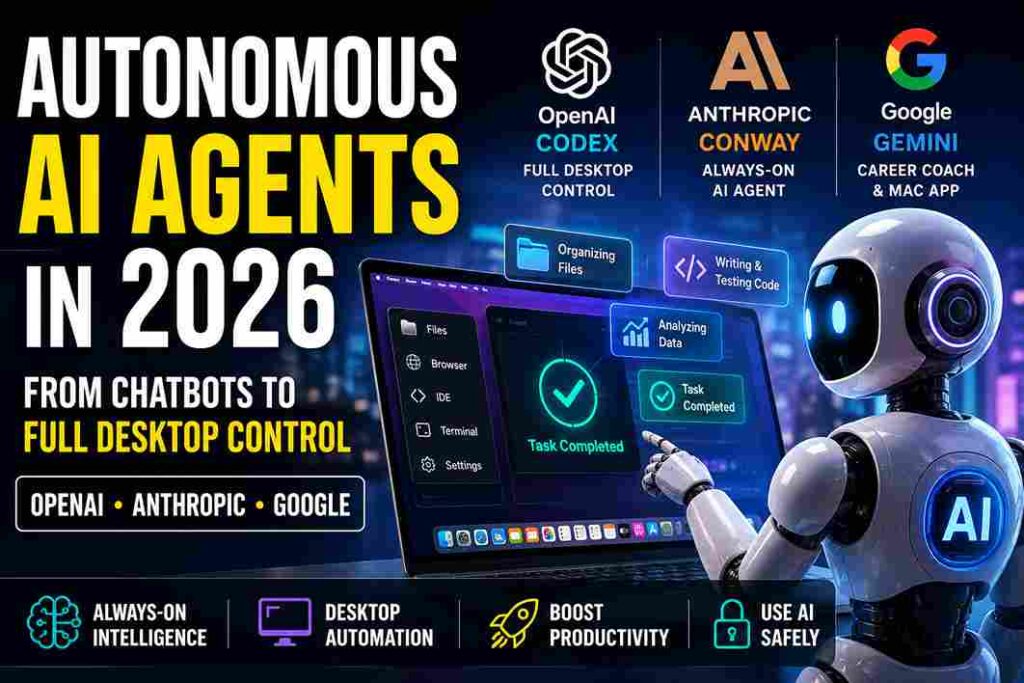
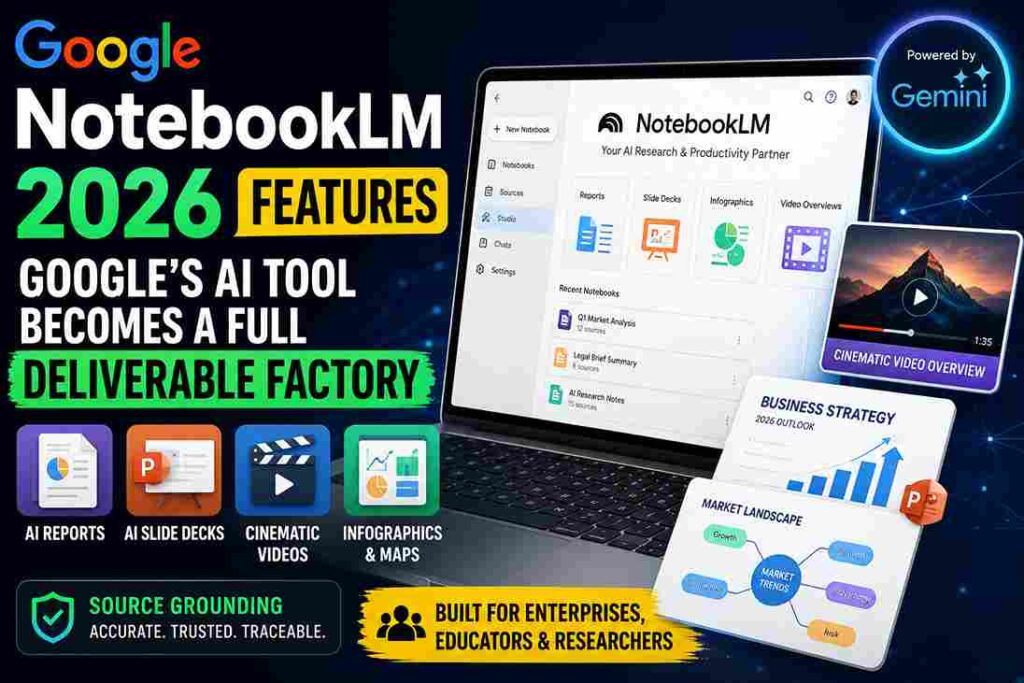
The Claude Opus 4.7 System Prompt Evolution is quickly becoming one of the most significant AI model updates of 2026.
Anthropic has quietly changed how Claude thinks, responds, and handles incomplete prompts.
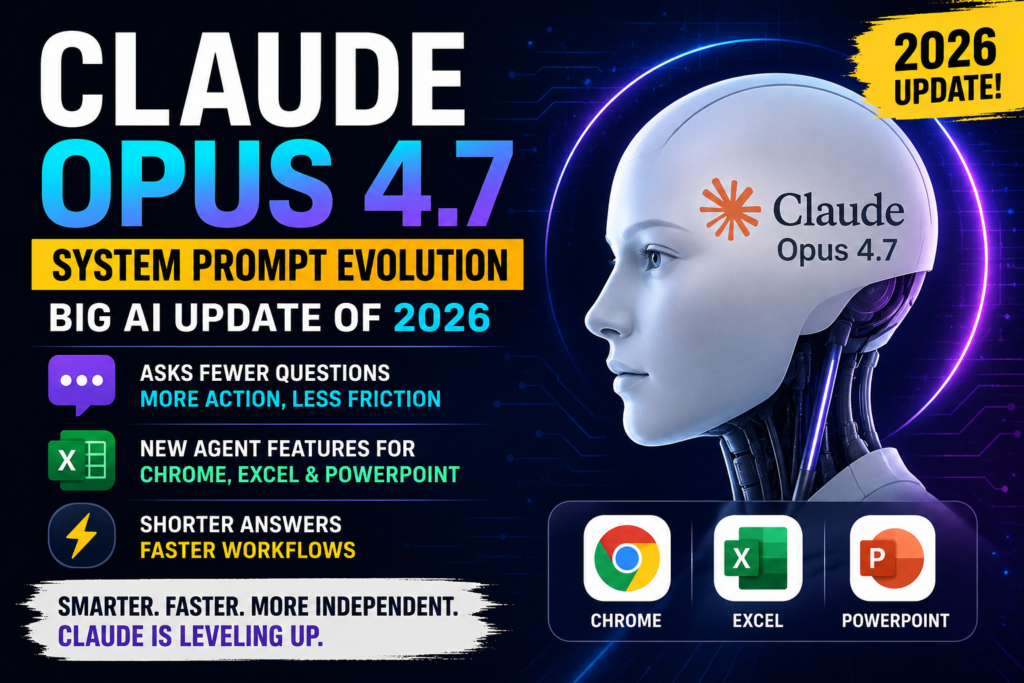
Now, Claude avoids unnecessary clarifying questions and handles tasks more independently.
At the same time, the company has introduced stronger agentic behavior for Chrome, Excel, and PowerPoint workflows.
Moreover, the update pushes Claude toward shorter, cleaner responses.
This shift could reshape how users interact with AI tools across work, search, and productivity ecosystems.
QUICK SUMMARY
- Anthropic updated Claude Opus 4.7 with smarter task execution rules.
- Claude now asks fewer clarifying questions for simple requests.
- New Chrome, Excel, and PowerPoint agent features expand automation capabilities.
Claude Opus 4.7 System Prompt Evolution Changes User Experience
Anthropic’s latest prompt redesign focuses heavily on reducing friction.
Previously, Claude often paused conversations to request additional details.
Now, the AI is instructed to make reasonable assumptions first.
As a result, users can complete workflows faster with fewer interruptions.
This change reflects a broader industry shift toward autonomous AI agents.
Many companies now prefer action-oriented systems instead of passive assistants.
Acting Instead of Over-Questioning
The new <acting_vs_clarifying> protocol marks a major shift.
Claude now attempts tasks even when prompts are slightly incomplete.
For example, a user requesting a blog draft may no longer receive multiple follow-up questions.
Instead, Claude generates a usable version immediately.
However, Anthropic still limits risky assumptions.
If a file or attachment is missing, Claude must still clearly ask for it.
Proactive Tool Calling Expands AI Independence
Another major update involves proactive tool usage.
Claude is now encouraged to search for available tools automatically.
Earlier versions sometimes responded with limitations too quickly.
Now, the system prompt encourages Claude to check accessible resources first.
As a result, workflows may feel more seamless for professionals.
This especially benefits developers, researchers, and productivity-focused users.
New Agentic Features Signal Bigger AI Ambitions
Anthropic has also expanded support for agent-style capabilities.
The system prompt now references Claude integrations with Chrome, Excel, and PowerPoint.
These integrations suggest deeper workplace automation plans.
Users may soon delegate browsing, spreadsheet analysis, and slide creation directly to AI.
Meanwhile, competitors are racing toward similar ecosystems.
That includes tools from OpenAI and Google.
Shorter Answers Become a Core Priority
One surprising update is the new verbosity constraint.
Anthropic now explicitly instructs Claude to avoid overly long responses.
This reflects growing complaints about AI-generated information overload.
Many users prefer concise, actionable outputs on mobile devices.
Therefore, the change may improve engagement and readability.
It also aligns with modern UX patterns used in AI chat products.
Knowledge Cutoff Updated to January 2026
Anthropic has also refreshed Claude’s reliable knowledge window.
The new cutoff date now extends to January 2026.
That gives users access to newer contextual understanding, especially for technology, software, and market-related discussions.
However, real-time awareness still depends on connected tools.
Static knowledge alone cannot replace live web capabilities.
Why the Industry Is Watching Closely
The Claude Opus 4.7 System Prompt Evolution matters far beyond Anthropic itself.
It highlights how system prompts now shape AI personality and usability.
Increasingly, prompt engineering happens at the platform level, not just the user level.
That means hidden instruction layers are becoming strategic infrastructure.
How to Use Claude Opus 4.7 More Effectively
Write direct prompts with clear goals and allow Claude to handle small missing details automatically.
How to Benefit From Claude’s Concise Responses
Ask for summaries, workflows, or quick outputs for better mobile-friendly reading.
How to Test Claude Opus 4.7 Agentic Capabilities
Use supported integrations like browser or productivity tools where available.
Consequently, future AI competition may depend less on raw models alone.
Behavior design could become equally important for user adoption.
Pro Tips
- Use clear task instructions for better Claude Opus 4.7 outputs.
- Keep prompts goal-focused instead of overly detailed.
- Test shorter prompts because Claude now intelligently assumes missing basics.
Conclusion
The Claude Opus 4.7 System Prompt Evolution shows how rapidly AI assistants are evolving in 2026.
Anthropic is moving Claude toward faster execution, fewer interruptions, and stronger workplace automation.
At the same time, concise responses and proactive tool behavior significantly improve mobile usability.
For users, developers, and businesses, these updates could redefine daily AI interactions.
As AI agents become more autonomous, system prompts may quietly become the most powerful layer in modern AI design.
Therefore, staying updated on these hidden changes will matter more than ever.
FAQs
What is Claude Opus 4.7 System Prompt Evolution?
It is Anthropic’s latest update designed to improve Claude’s behavior, task handling, and response style.
Why is Claude asking fewer questions now?
The new protocol encourages Claude to attempt tasks before requesting unnecessary clarification.
Does Claude Opus 4.7 support AI agents?
Yes. Anthropic added instructions for Chrome, Excel, and PowerPoint agent workflows.