

Best AI Tools for Photorealistic Images in 2026: Guide for Creators and Designers
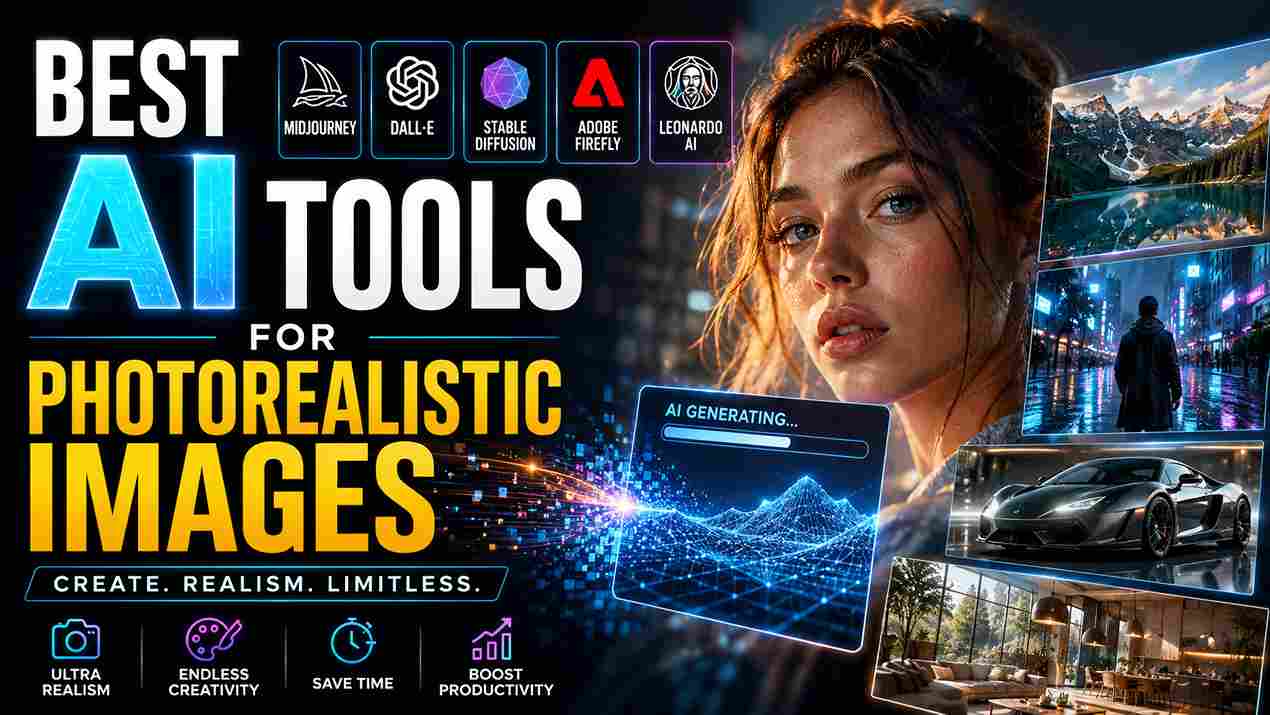
In the last few years, artificial intelligence has completely changed the way we create digital visuals. What once required professional cameras, expensive lighting setups, and advanced Photoshop skills can now be achieved with a few carefully written prompts. Today, AI tools are capable of producing images so realistic that even trained photographers sometimes struggle to distinguish them from real photos.
This transformation has given rise to a new creative era where imagination is the only limitation. Whether you’re a content creator, marketer, designer, or blogger, photorealistic AI image tools have become essential for producing high-quality visuals quickly and affordably.
Let’s explore the best AI tools for photorealistic images and understand how each one stands out in this competitive space.
The Rise of Photorealistic AI Image Generation
Photorealistic AI images are not just about creating beautiful visuals—they are about generating images that mimic real-world lighting, textures, depth, and camera behavior. Modern AI models are trained on massive datasets of photographs, artwork, and 3D renders, allowing them to understand how real-world visuals are constructed.
This is why today’s AI-generated portraits can replicate skin texture, natural shadows, reflections on glass, and even cinematic lighting conditions. Tools like Midjourney, DALL·E, Stable Diffusion, Adobe Firefly, and Leonardo AI are leading this revolution.
Each of these platforms uses different models and creative approaches, but all aim to achieve one goal: turning text prompts into lifelike images.
1. Midjourney – The Cinematic Realism King
Midjourney is widely considered one of the most powerful tools for photorealistic and cinematic image generation. Known for its artistic depth and lighting quality, Midjourney excels in creating images that look like high-end movie stills or professional photography.
It is especially popular among digital artists and creators who want dramatic, visually striking compositions. From golden-hour portraits to futuristic cityscapes, Midjourney consistently delivers visually stunning results with strong attention to detail.
You can explore it here: Midjourney Official Website
What makes Midjourney unique is its ability to interpret prompts creatively. Instead of strictly following instructions, it enhances them, often producing results that feel more artistic and emotionally engaging. However, this also means it offers slightly less control compared to other tools.
2. DALL·E – The Balanced Realism Generator
Developed by OpenAI, DALL·E is one of the most accessible and user-friendly AI image generators. It is designed to accurately follow prompts while still maintaining a high level of realism.
DALL·E is particularly strong in generating clean, well-composed images with natural lighting and realistic proportions. It is widely used for marketing visuals, blog illustrations, product mockups, and social media content.
You can learn more here: OpenAI DALL·E
Unlike Midjourney, DALL·E focuses more on precision and prompt accuracy. If you describe a scene in detail, it is more likely to reproduce it exactly as you imagined. This makes it ideal for business and professional use cases where consistency is important.
3. Stable Diffusion – The Open-Source Powerhouse
Stable Diffusion is one of the most important breakthroughs in AI image generation because it is open-source and highly customizable. Developed by Stability AI, it allows users to run models locally or through various online platforms.
Visit here: Stable Diffusion (Stability AI)
What makes Stable Diffusion stand out is its flexibility. Unlike closed systems, it allows developers and artists to fine-tune models, train custom datasets, and create highly specific photorealistic outputs. This makes it a favorite among technical users and advanced designers.
With the right settings and models, Stable Diffusion can produce images that rival professional DSLR photography. However, it requires more learning compared to tools like DALL·E or Firefly.
4. Adobe Firefly – The Creative Industry Standard
Adobe Firefly is Adobe’s answer to the growing demand for AI-generated visuals in professional design workflows. Integrated into Adobe Photoshop and Illustrator, Firefly is designed for safe, commercially usable content creation.
Explore here: Adobe Firefly
Firefly focuses heavily on realism while ensuring that generated content blends seamlessly with existing creative assets. It is widely used in advertising, branding, and professional media production.
One of its strongest advantages is how naturally it integrates into Adobe’s ecosystem. Designers can generate an image and immediately refine it using Photoshop tools, making the workflow extremely efficient.
5. Leonardo AI – The Rising Creative Contender
Leonardo AI has quickly gained popularity among creators who want high-quality photorealistic outputs without complex setups. It is designed for game assets, concept art, and realistic digital illustrations.
Visit here: Leonardo AI
Leonardo AI stands out because of its balance between simplicity and control. It offers pre-trained models optimized for realism, allowing users to generate detailed images with minimal effort. It is especially useful for indie developers, YouTubers, and social media creators.
The platform also includes editing tools and fine-tuning options, making it a strong competitor in the AI art space.
Which AI Tool Produces the Most Realistic Images?
There is no single winner because each tool serves a different purpose.
Midjourney is best for cinematic, artistic realism with emotional depth.
DALL·E is ideal for structured, accurate, and clean visuals.
Stable Diffusion is perfect for customization and technical control.
Adobe Firefly excels in professional design workflows.
Leonardo AI is great for fast, high-quality creative production.
If your goal is purely photorealistic images that look like professional photography, Midjourney and Stable Diffusion (with fine-tuned models) are often the top choices. However, for business and marketing use, Adobe Firefly and DALL·E offer more practical advantages.
The Future of Photorealistic AI Images
The future of AI-generated visuals is moving toward even more realism, where AI will replicate not just visuals but also physical camera behavior such as lens distortion, motion blur, and depth of field with perfect accuracy.
We are also moving toward real-time image generation, where users can adjust lighting, mood, and composition instantly. This will revolutionize industries like advertising, filmmaking, gaming, and digital content creation.
As AI tools continue to improve, the line between real photography and generated images will become increasingly blurred.
Final Thoughts
AI image generation is no longer just a trend—it is now a core part of modern digital creativity. Whether you’re building a brand, creating content for social media, or working in professional design, photorealistic AI tools can save time and unlock entirely new creative possibilities.
The best approach is not to rely on one tool, but to understand the strengths of each platform and use them based on your needs. With tools like Midjourney, DALL·E, Stable Diffusion, Adobe Firefly, and Leonardo AI, the future of photorealistic design is already here.
Leave a Reply