

Top 10 AI Image Tools Ranked (Guide for Creators, Designers & Marketers)
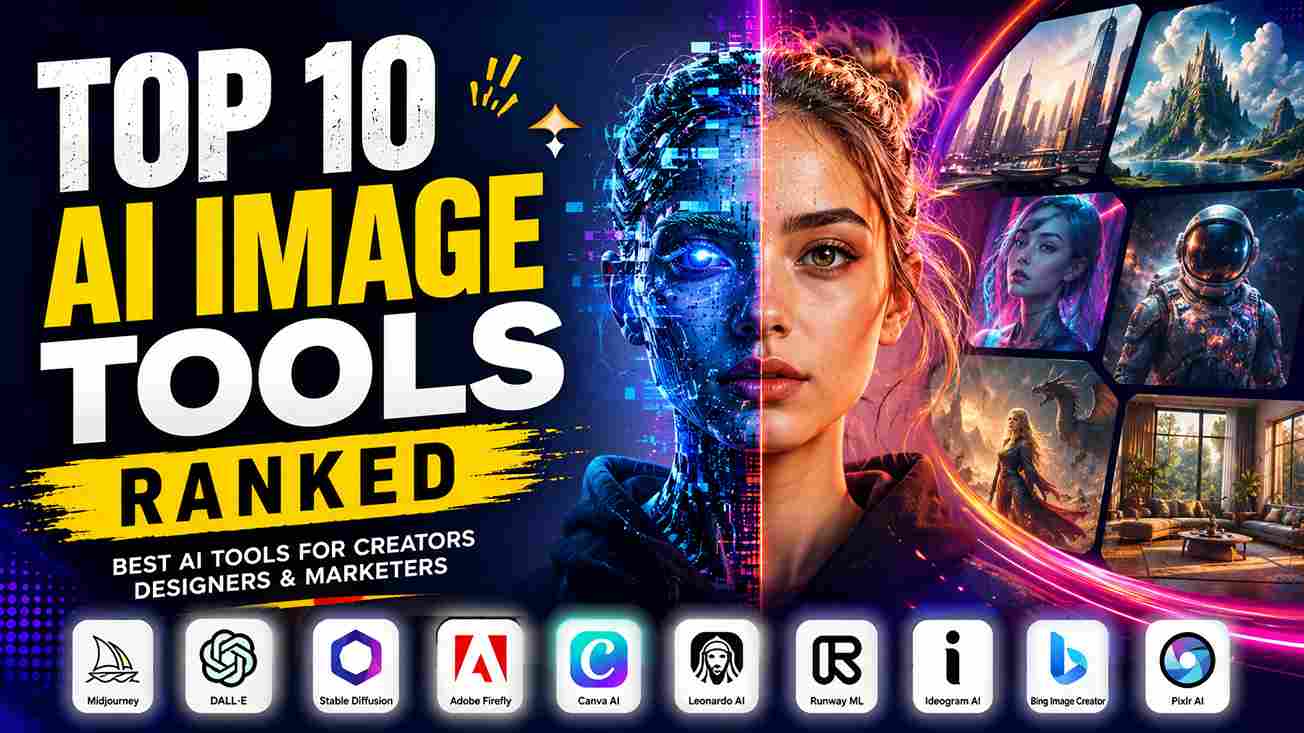
The world of digital creativity has completely changed in the last few years. What once required professional design skills, expensive software, and long editing hours can now be done in seconds using AI image tools. Whether you are a content creator, marketer, designer, or just someone exploring visual creativity, AI image generation has become an essential part of modern workflows.
But with so many tools available, the real question is simple: which AI image tools are actually worth using in 2026?
In this guide, we explore and rank the Top 10 AI image tools based on quality, usability, realism, features, and overall creative control. Instead of just listing them, we’ll understand what makes each one powerful and where they perform best.
1. Midjourney – The King of Artistic AI Images
Midjourney remains one of the most dominant names in AI-generated art. Known for its cinematic, hyper-detailed, and artistic visuals, Midjourney has built a strong reputation among designers, storytellers, and digital artists.
What makes Midjourney special is its ability to create images that feel like they belong in a movie or a high-end concept art gallery. The lighting, textures, and composition often surpass expectations, especially when working with creative prompts.
It operates primarily through Discord, which may feel slightly technical for beginners, but once mastered, it becomes incredibly powerful for generating professional-level visuals.
Official site: Midjourney
2. DALL·E – The Most Balanced AI Image Generator
DALL·E by OpenAI is one of the most user-friendly and intelligent AI image tools available today. It focuses on understanding natural language extremely well, which means you don’t need complex prompting skills.
DALL·E is widely used for marketing visuals, blog graphics, product concepts, and realistic compositions. It excels in generating clean, structured, and conceptually accurate images.
While it may not always reach the ultra-artistic flair of Midjourney, its consistency and prompt accuracy make it extremely reliable for business and content creation.
Official site: OpenAI DALL·E
3. Stable Diffusion – The Open-Source Powerhouse
Stable Diffusion is the go-to choice for developers, AI enthusiasts, and professionals who want full control over image generation.
Unlike closed systems, Stable Diffusion can be customized, trained, and integrated into different workflows. This makes it extremely powerful for advanced users who want unique outputs.
Its biggest advantage is flexibility. You can run it locally, fine-tune models, and even build custom AI image applications. However, beginners may find it slightly technical compared to other tools.
Official site: Stability AI
4. Adobe Firefly – Best for Professional Designers
Adobe Firefly is designed for creators who already use Adobe products like Photoshop and Illustrator. Its biggest strength is seamless integration into professional design workflows.
Firefly focuses heavily on commercial-safe AI generation, meaning the images are suitable for marketing, branding, and business use without copyright concerns.
It’s especially powerful for text effects, product mockups, and realistic image generation within a design environment.
Official site: Adobe Firefly
5. Canva AI – Best for Beginners & Social Media Creators
Canva has integrated AI tools that make it extremely easy for beginners to generate and edit images.
Canva AI is perfect for Instagram posts, thumbnails, ads, and quick creative designs. It removes complexity and allows users to focus on creativity instead of technical details.
The drag-and-drop interface combined with AI image generation makes it one of the fastest ways to produce content for social media marketing.
Official site: Canva
6. Leonardo AI – Best for Game Assets & Concept Art
Leonardo AI is becoming extremely popular among game developers and digital artists.
It specializes in creating game assets, character designs, environments, and high-quality concept art. Leonardo AI offers fine control over style consistency, which is essential for storytelling projects.
It is also beginner-friendly compared to other advanced tools, making it a strong competitor in the AI art space.
Official site: Leonardo AI
7. Runway ML – Best for AI Video + Image Creation
Runway ML is not just an image tool—it is a complete AI-powered creative suite.
It allows users to generate images, edit videos, remove backgrounds, and even create motion content using AI. This makes it especially valuable for content creators working in both video and graphic design.
Runway ML is widely used in modern filmmaking and social media content production.
Official site: Runway ML
8. Ideogram AI – Best for Text in Images
Ideogram stands out because it handles text inside images much better than most AI tools.
One of the biggest problems in AI image generation has been distorted or unreadable text. Ideogram solves this by producing clean typography inside posters, logos, and marketing visuals.
It is especially useful for designers creating ads, banners, and branding content.
Official site: Ideogram
9. Bing Image Creator – Best Free AI Tool
Bing Image Creator is powered by OpenAI’s models and is widely accessible for free users.
It is simple, fast, and integrated into Microsoft’s ecosystem. While it may not offer advanced controls like Midjourney or Stable Diffusion, it is perfect for quick image generation and casual users.
Its biggest advantage is accessibility—anyone with a Microsoft account can use it instantly.
Official site: Bing Image Creator
10. Pixlr AI – Best Lightweight Editing + Generation Tool
Pixlr combines traditional photo editing with modern AI generation features.
It is lightweight, browser-based, and easy to use, making it ideal for quick edits, filters, and AI-powered image enhancements. While it doesn’t compete with high-end tools in raw generation quality, it excels in convenience.
Official site: Pixlr
Final Thoughts
AI image tools are no longer just experimental technologies—they are now essential creative companions. From cinematic artwork in Midjourney to professional design workflows in Adobe Firefly and beginner-friendly tools like Canva AI, each platform serves a different creative purpose.
The best choice depends entirely on your goals. If you want artistic freedom, Midjourney leads the way. If you want business-ready visuals, Adobe Firefly or DALL·E are excellent. If you want flexibility and control, Stable Diffusion remains unmatched.
In 2026, the real power is not just in using AI tools—but in knowing how to combine them for your workflow. Many creators now use multiple platforms together to achieve the perfect balance of speed, quality, and creativity.
Leave a Reply